Bespoke Stained Glass: The Main Types and How to Choose the Right One
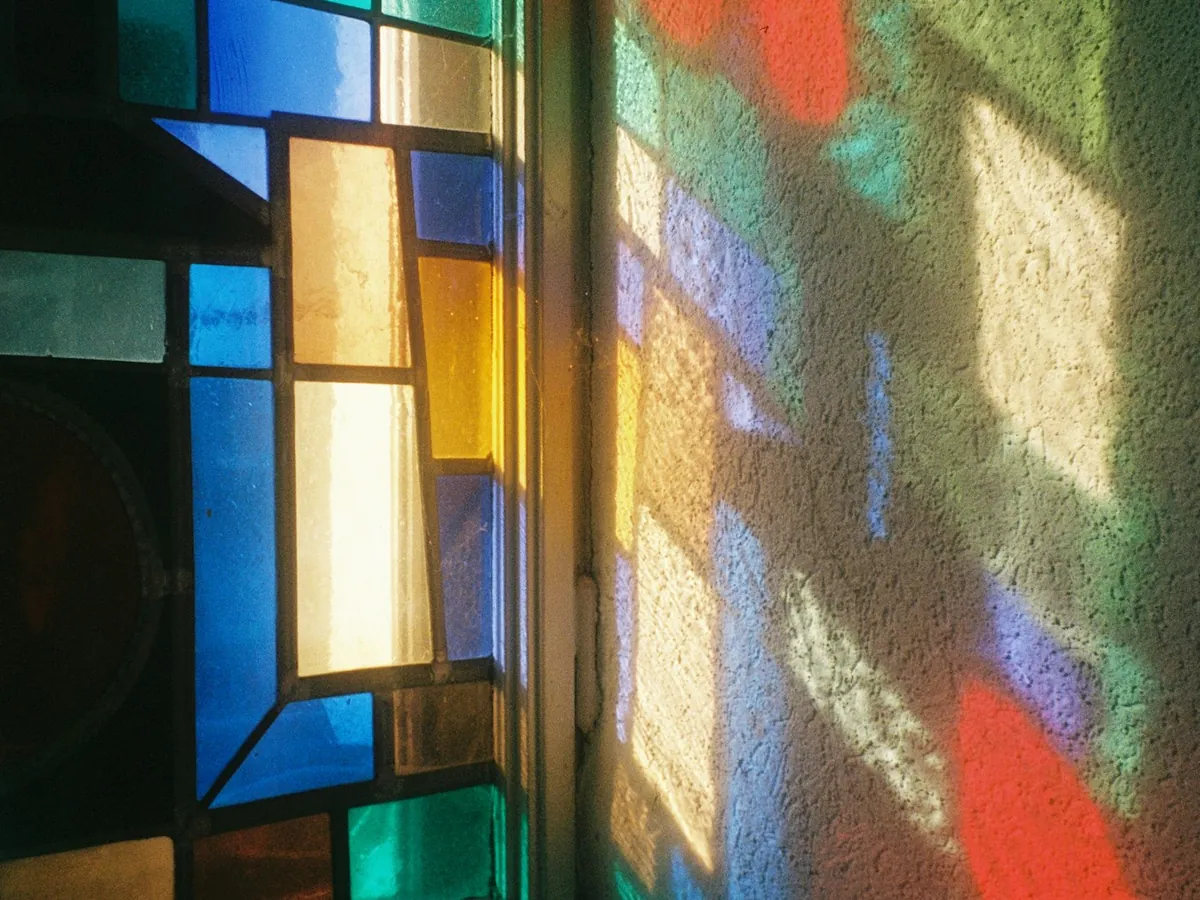
Ask ten people to picture stained glass and you will get ten different images: a cathedral rose window, a 1930s sunrise front door, a Tiffany lamp, a frosted bathroom panel with a single line of colour. They are all stained glass in the broad sense — but they are made in very different ways, and that difference matters when you commission a piece for your own building.
This guide walks through the main techniques we use for stained glass made to order, what each one does best, and the questions that will lead you to the right choice.
Traditional leaded glass
The classic method. Pieces of coloured or textured glass are cut by hand and joined with H-section strips of lead called came. The joints are soldered on both sides, then the panel is cemented and brushed so it becomes rigid and weathertight.
Leaded glass suits windows, doors and anything with a strong graphic line. The lead itself becomes part of the drawing — bold, rhythmic and unmistakably handmade. It is also the most repairable technique: a cracked piece can be replaced decades later without remaking the whole panel.
Copper foil (the Tiffany technique)
Here each piece of glass is wrapped in thin copper tape and the seams are flooded with solder. The lines can be much finer than lead, so copper foil is ideal for small, intricate pieces, curved forms and three-dimensional work such as lampshades and sculptural panels.
For large flat windows it is usually combined with leading or set inside a protective unit, because the fine seams are less rigid than came over big spans.
Painted and kiln-fired glass
When you need faces, lettering, heraldry or delicate shading, paint is the answer. Vitreous paints and silver stain are applied to the glass and fired in a kiln so they fuse permanently into the surface. This is the language of Gothic and Victorian church windows — and of memorial and commemorative work today.
Painted detail is the difference between a pattern and a story. It is slow, layered work — and it lasts for centuries.
Etched, sandblasted and bevelled glass
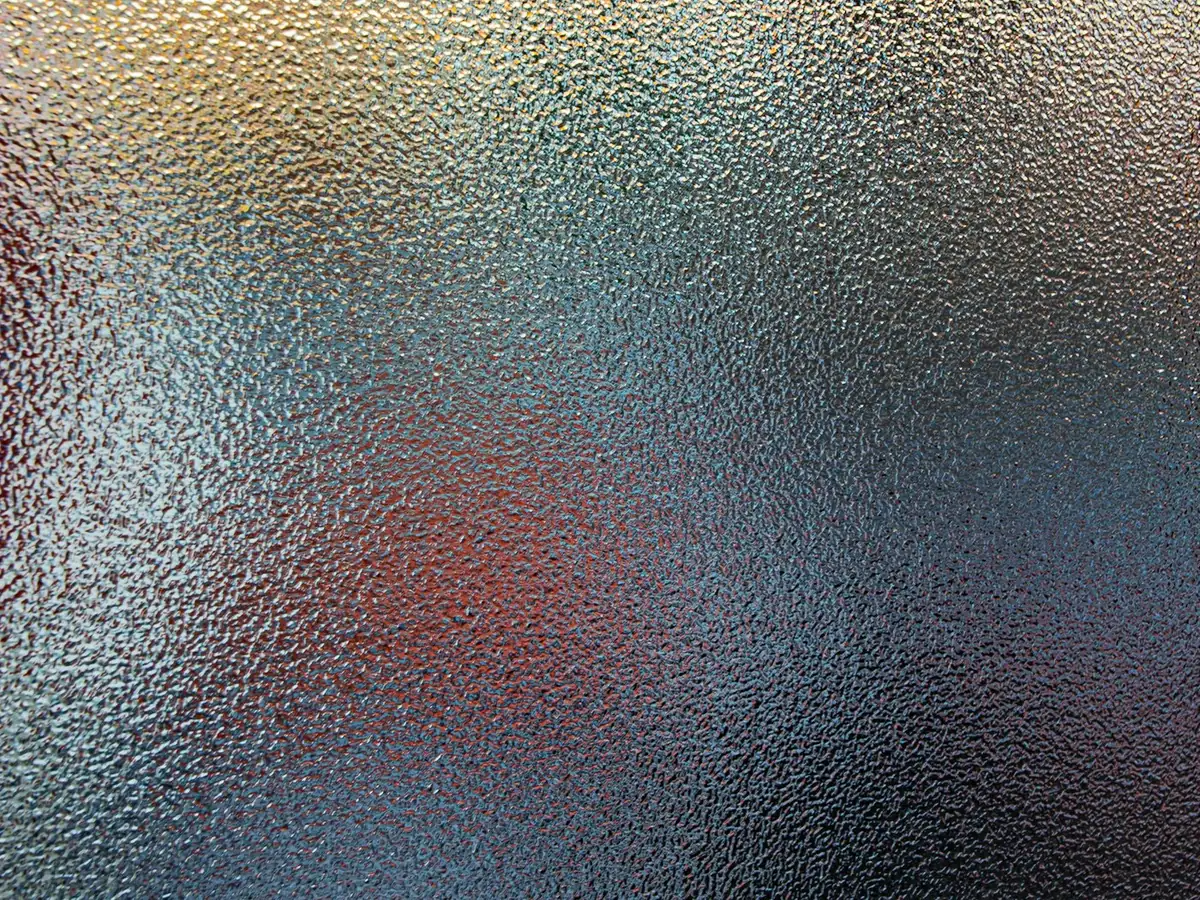
Not all decorative glass relies on colour. Sandblasting and acid etching create a frosted design in clear glass, giving privacy with a soft, luminous finish. Bevelled glass has its edges ground at an angle, so each piece acts like a small prism. Both are popular in Art Deco designs, bathrooms and office partitions, and both combine beautifully with leaded colour.
Fused and kiln-formed glass
Fused glass is made by layering pieces of compatible glass and melting them together in a kiln. There are no lead lines at all, which gives a softer, more contemporary look. It works well for wall art, splashback inserts and small decorative panels.
What about stained glass effect film?
Overlay or film systems stick coloured film and imitation lead strips onto a single sheet of glass. They are quick and inexpensive, but they do not have the depth, texture or longevity of real glass, and they cannot be repaired in the same way. If the piece is meant to last, real stained glass is worth it.
How to choose: five questions
- Where will it live? An external window needs weather resistance and thermal performance; an internal screen can be lighter and more delicate.
- How much privacy do you need? Dense textures and etched glass hide more; clear glass and pale tints keep the view.
- What is the architecture saying? A Victorian terrace, a 1930s semi and a new-build apartment each suit different techniques and styles.
- Does it need to be safety glass? Doors and low-level glazing usually do. Stained glass can be laminated or sealed inside a toughened double-glazed unit.
- How will light reach it? North-facing windows favour lighter, warmer glass; a south-facing panel can carry deep, saturated colour.
Bring the opening, we will bring the options
The easiest way to decide is to see real glass in real light. Send us a photo of the opening, rough measurements and a few images you love, and we will suggest techniques, styles and glass samples that suit both the space and the way you live in it.