Which Glass Should You Order: Clear, Frosted, Toughened or Decorative?
Glass is not one material — it is a family. Two panes that look identical on a rack can behave completely differently when they are struck, heated or simply looked through. Choosing well means thinking about four things: safety, privacy, strength and appearance.
Float glass: the starting point
Ordinary clear glass is called float glass, after the way it is made on a bath of molten tin. It is clear, flat and inexpensive, and it can be cut, drilled and edged easily. It is ideal for picture frames, cabinet fronts and secondary uses — but when it breaks it forms sharp shards, so it is not suitable where people might collide with it.
Look closely at the edge of a thick float pane and you will see a green tint. Where perfect colour matters — display cases, white splashbacks, very thick shelves — low-iron glass removes most of that tint for a crisper, whiter look.
Toughened glass
Toughened (also called tempered) glass is heated and rapidly cooled so its surface is under compression. It is roughly four to five times stronger than float glass of the same thickness, and if it does break, it shatters into small, blunt granules rather than dangerous shards.
The catch: toughened glass cannot be cut or drilled afterwards. Every size, hole, notch and cut-out has to be finalised before toughening — which is why accurate measuring matters so much.
Laminated glass
Laminated glass sandwiches a plastic interlayer between two or more panes. If it breaks, the fragments stay bonded to the interlayer and the pane stays in place. That makes it the choice for overhead glazing, balustrades, security glass and anywhere a falling piece would be dangerous. Special interlayers also reduce noise and block most UV light, protecting furnishings from fading.
Toughened glass is strong. Laminated glass holds together. Some jobs need one, some need both.
Frosted and obscure glass
There are several ways to make glass private:
- Acid-etched glass has a smooth, satin finish that is consistent across the pane and resists fingerprints well.
- Sandblasted glass is frosted by abrasive, which means it can carry a custom pattern, lettering or a graded fade.
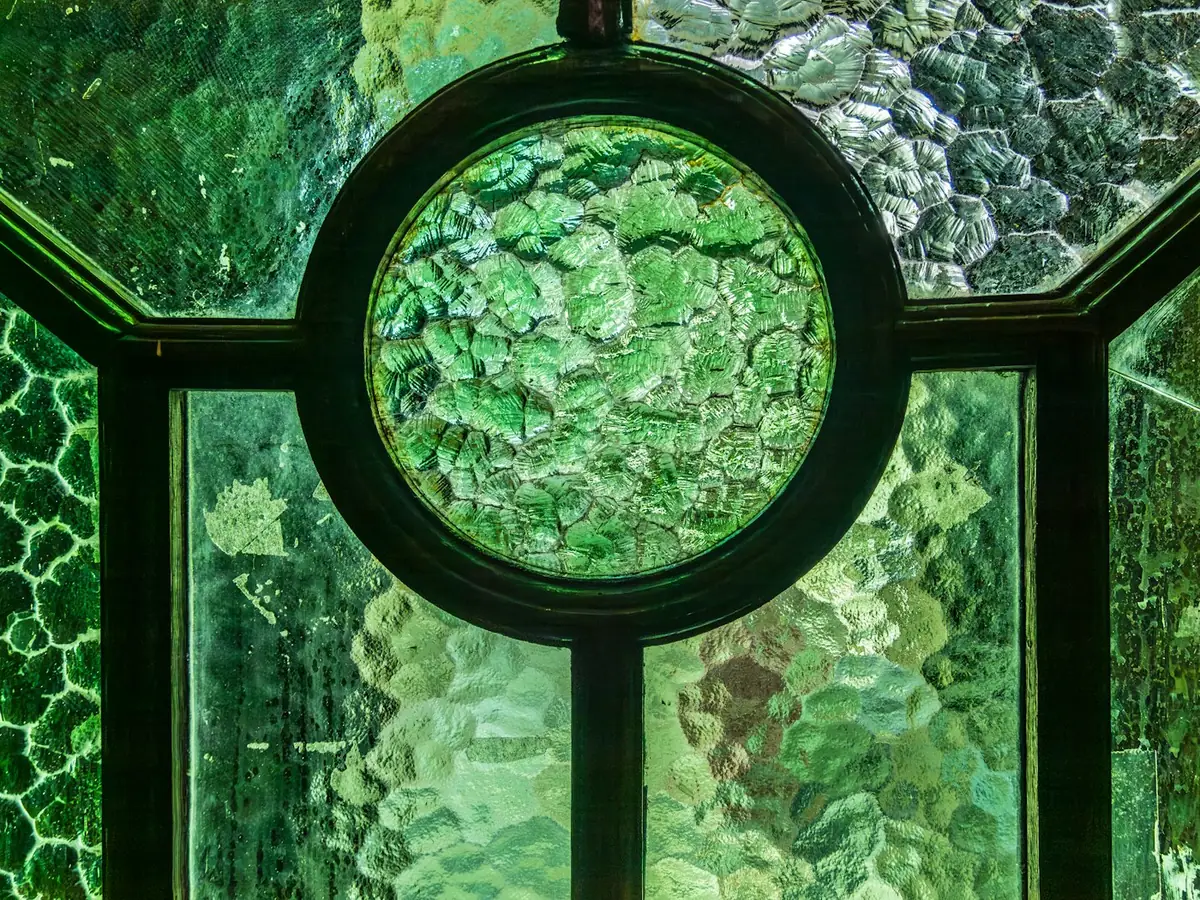
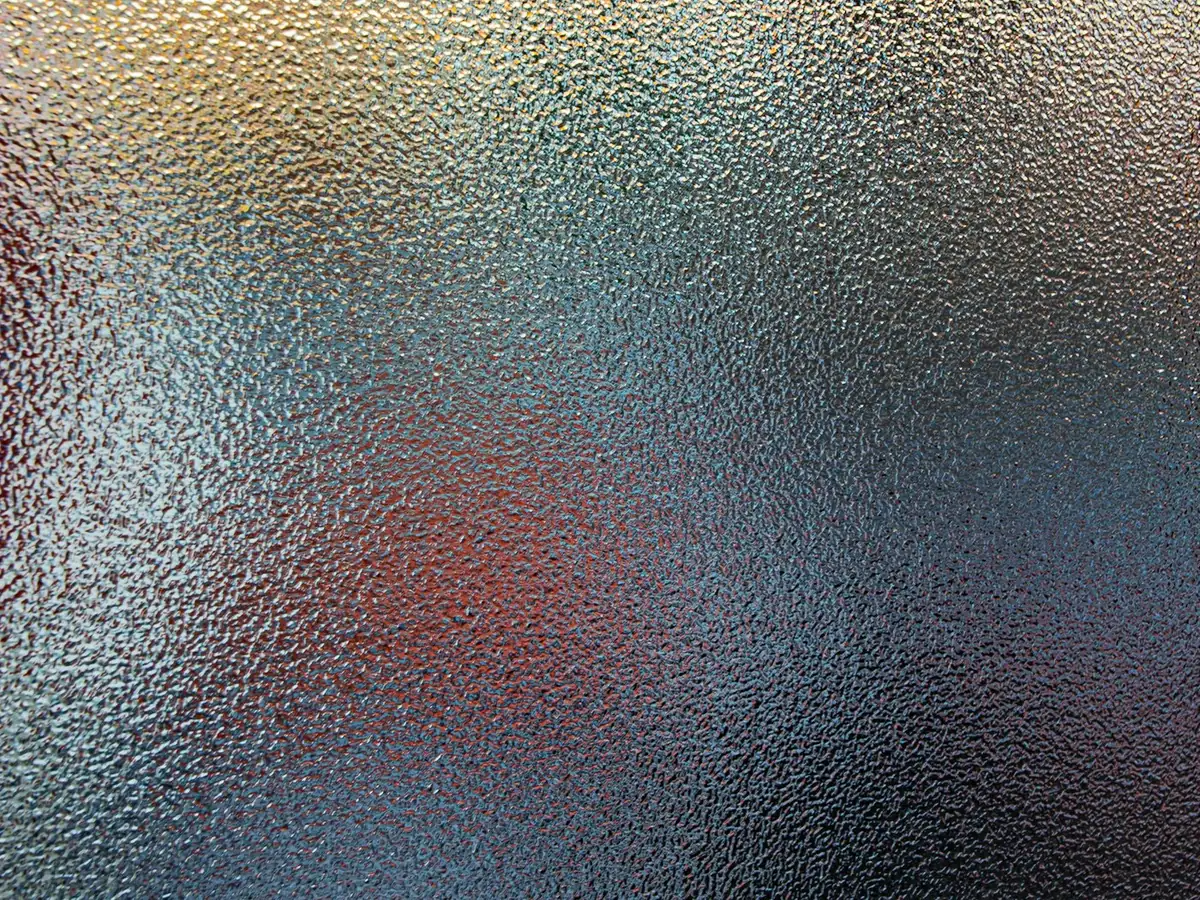
- Patterned (textured) glass is rolled with a texture. Manufacturers grade these patterns on an obscuration scale, so you can choose exactly how much is hidden.
- Frosted film is the least durable option, but useful as a temporary or rented-property solution.
Decorative glass
Back-painted glass for splashbacks, tinted and mirrored glass, bevelled glass, fused glass and, of course, stained glass — hand-rolled or mouth-blown sheets full of streaks, seeds and texture. Decorative glass can almost always be combined with a safety glass, either by laminating or by sealing it inside a toughened double-glazed unit.
Safety glass and the regulations
In England, building regulations require safety glazing in so-called critical locations. Broadly, that means glass in doors and in side panels close to doors up to about shoulder height, and glass in walls and windows close to floor level. If you are unsure whether your opening counts, tell us where it is and we will specify accordingly.
A quick decision guide
- Doors, low windows, shower screens: toughened or laminated.
- Roof lights and overhead panels: laminated, often combined with toughened.
- Bathrooms and street-facing windows: etched, sandblasted or patterned glass.
- Shelves and table tops: toughened, thickness chosen for span and load.
- Feature pieces: stained or decorative glass, protected as the location requires.
Not sure? Send us the location and the purpose and we will recommend the right specification — and explain why.