
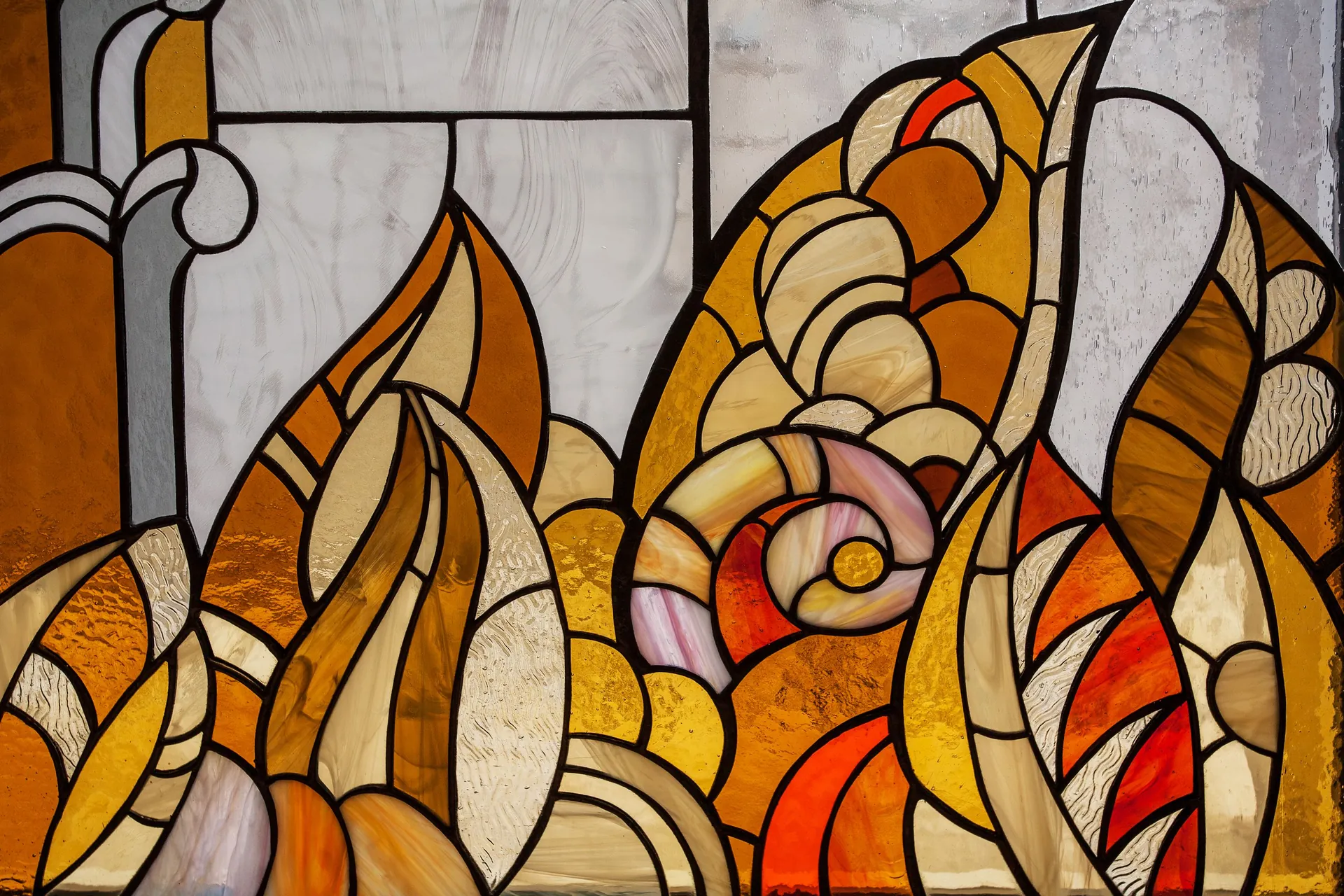
Art Deco Stained Glass
Sunrays, chevrons and crisp bevels — the confident geometry of the 1920s and 30s, restored for period homes and reimagined for modern interiors.
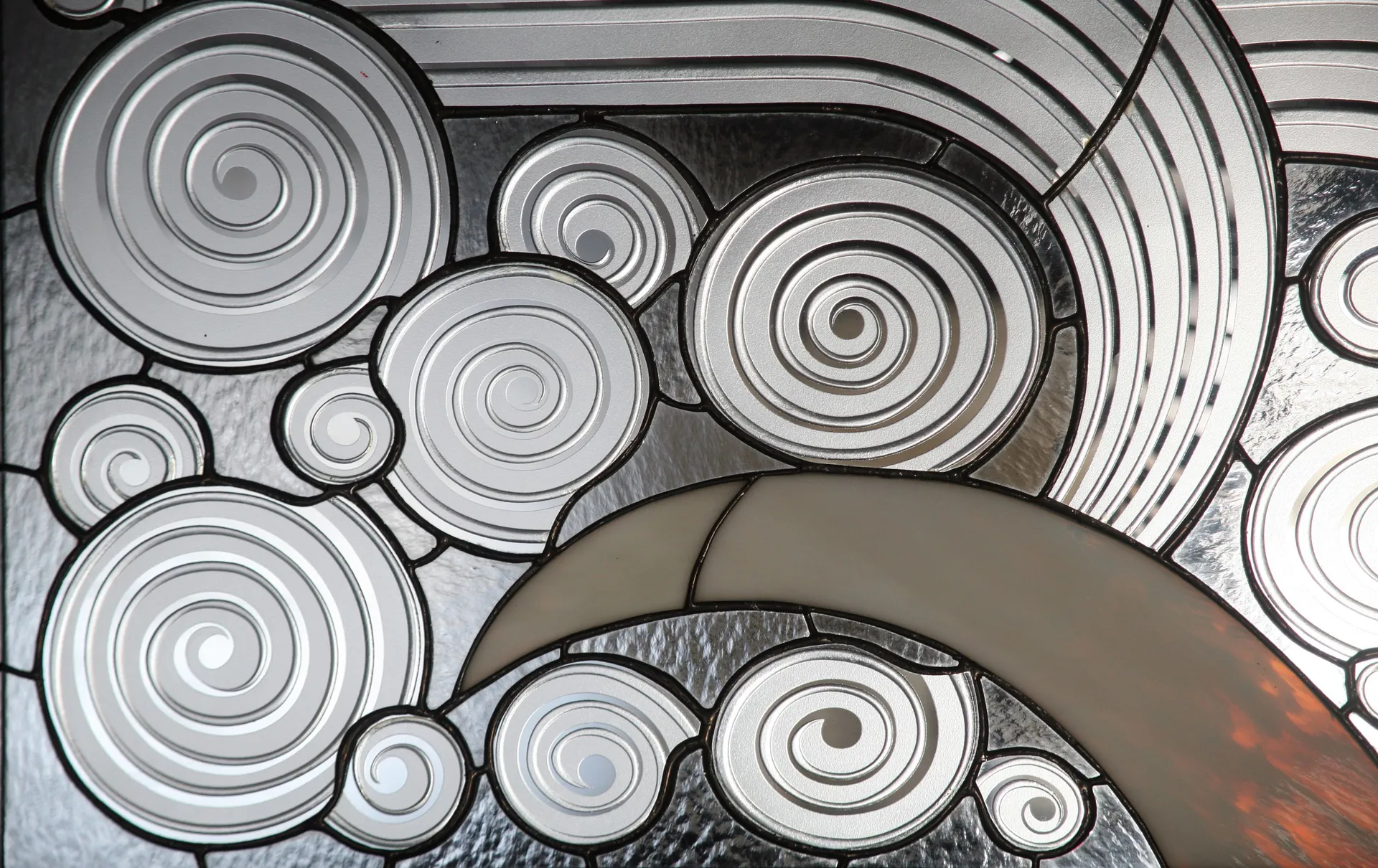
- Era
- 1920s–1930s
- Signature
- Sunbursts, chevrons, fans
- Glass
- Clear textures, bevels, amber & green
- Best for
- Doors, porches, bars, screens
A style born between the wars
Art Deco took its name from the great 1925 exhibition of decorative arts in Paris, but it found one of its warmest homes in Britain. Through the 1930s, cinemas, hotels and seaside lidos were finished with its streamlined shapes — and so were thousands of new suburban houses, whose front doors and porches still glow with the famous rising-sun motif.
That is what makes Deco glass so personal. For many of the people we work with, it is not a fashion but part of the house itself: the panel that has caught the morning light in the hallway for ninety years.
The visual language
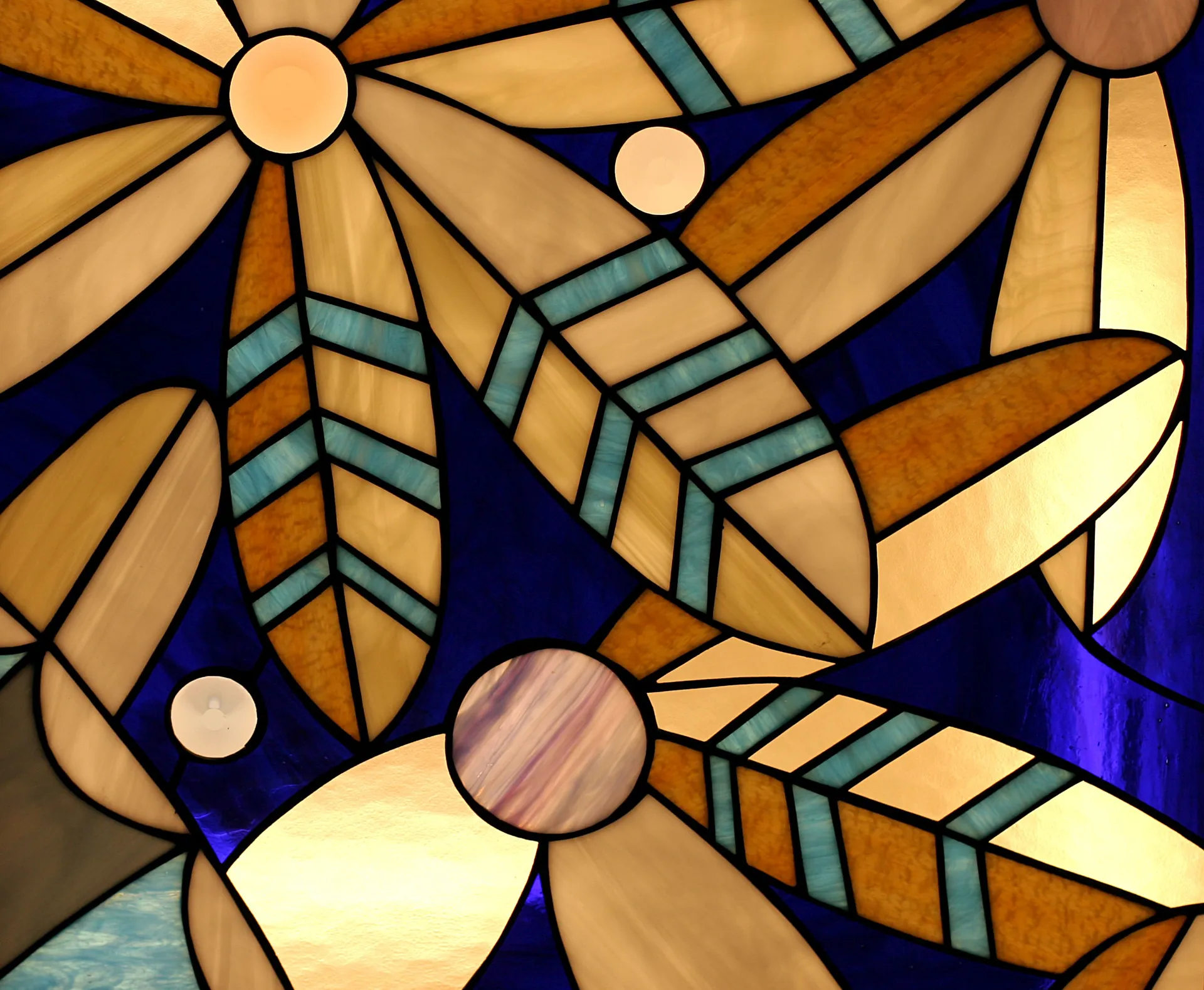
Deco is geometry with confidence. Rays fan out from a low sun, chevrons stack into stepped ziggurats, and simple curves meet straight lines at precise angles. Flowers appear too, but stylised and flattened, as if cut from metal.
Colour is used sparingly. Most of a panel is usually clear textured glass — reeded, hammered, seedy — with bevels catching the light and a few accents of amber, emerald, smoke or deep blue. The lead lines are part of the drawing, so we plan every joint as carefully as the colours.
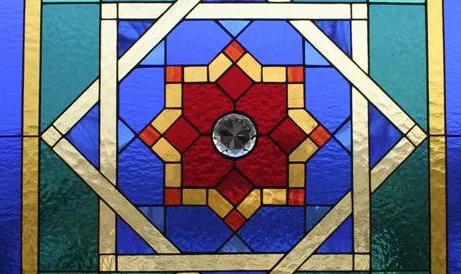
The best Deco glass looks as though it was drawn with a ruler and a compass — and then given a pulse.
Restoring and matching period glass
When an original panel is cracked or bowed, the first question is always what can be saved. We record the design before dismantling, clean and keep every sound piece, and re-lead the panel with new came and cement so it is flat and weathertight again.
Some period textures are no longer manufactured. Where a piece is missing we search for the closest match in colour, texture and thickness, so the repair sits quietly beside the original. If you are replacing a whole door, we can also reproduce a matching neighbour's design to keep a street consistent.
For extra warmth and security, a restored or new Deco panel can be sealed inside a double-glazed unit — you see the leaded glass, while the outer panes do the hard work.
Art Deco for modern interiors
The same geometry looks remarkable in a contemporary space. Back-bar screens with gilded bevels, cabinet doors with a single fan motif, internal screens that divide a kitchen from a lounge — Deco lines bring rhythm without clutter. We often push the language further for these projects: mirrored segments, sandblasted rays, or one bold colour used at architectural scale.
Typical commissions
- Front doors and side lights
- Fanlights and porches
- Bar backs and cocktail lounges
- Room dividers and cabinet doors
Questions we are often asked
Can you match the existing 1930s panels in my door?
Usually, yes. We survey the original, record the design line for line and select the closest available textures and colours. Where a texture is no longer made, we show you the options side by side before anything is cut.
Can an Art Deco panel go into double glazing?
Yes. The leaded panel can be sealed between toughened or laminated panes inside a double-glazed unit, which improves insulation and security and makes cleaning simple.
Will the style suit a new-build home?
Very well. Deco is fundamentally geometric, so it sits comfortably with modern architecture. We simply adjust the scale and colour to the space.
Explore further
More of Our Craft
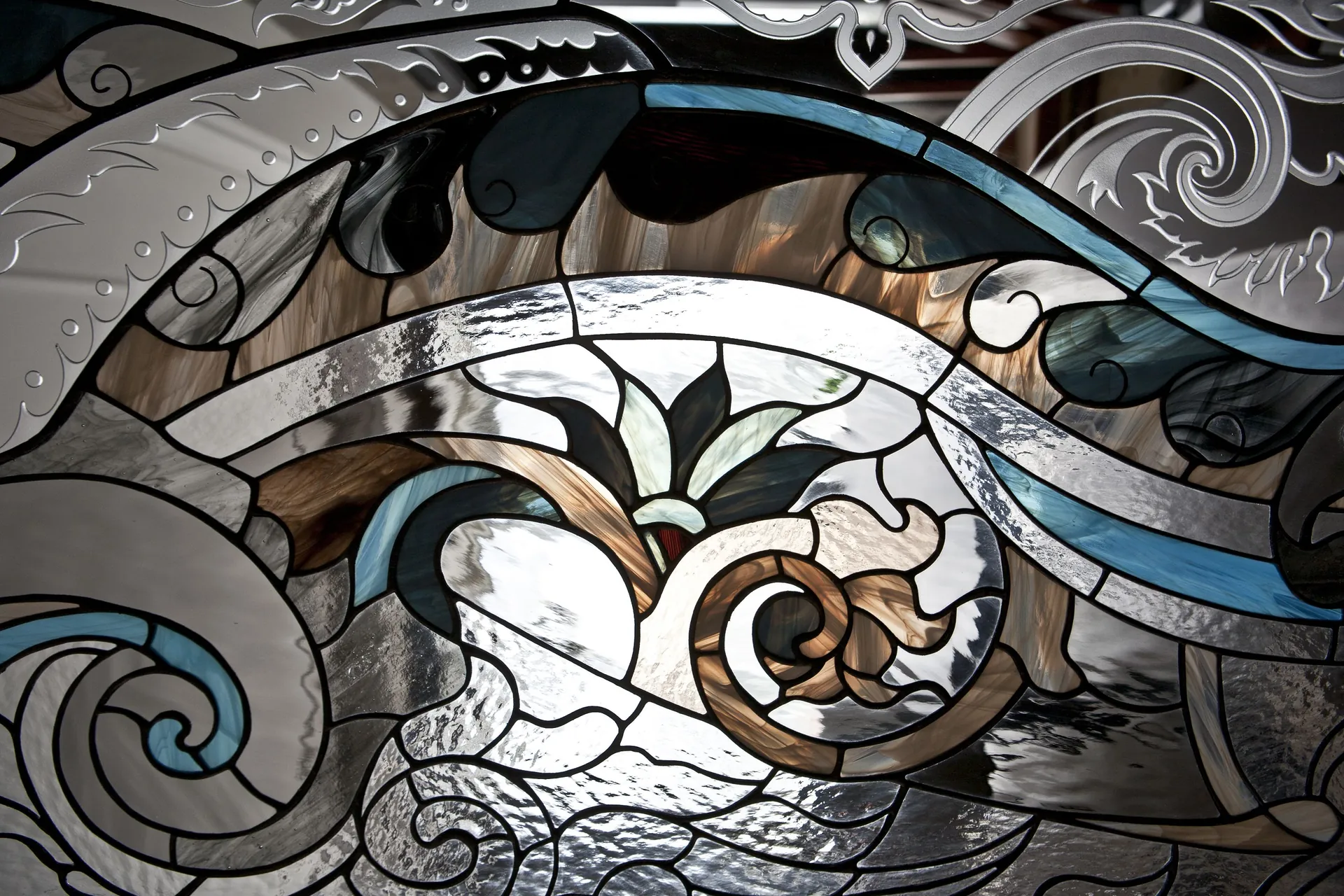

Every piece begins with a conversation
Bring colour into the light
Send us a photo of the opening and a few images you love. We will reply with ideas, glass samples and an individual quotation — no obligation.